Vast reserves, Hormuz, infrastructure define Iran's geopolitical oil weight: expert
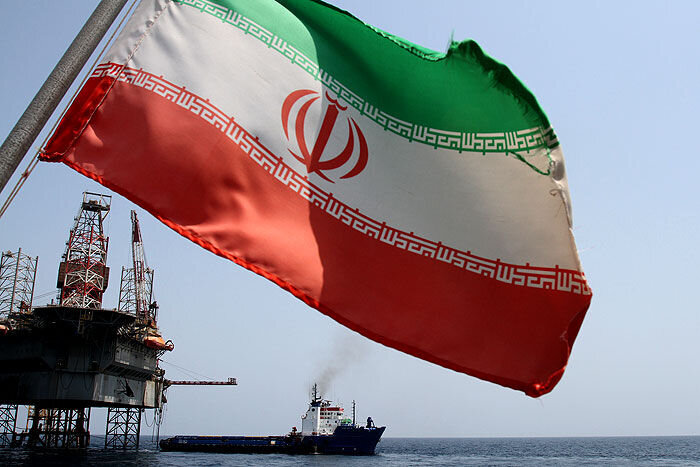
TEHRAN- Hamid Nobahar, an economic expert, in an interview with Tasnim News Agency, while explaining the position Iran's oil in the world's energy equations, said: Iran's oil power cannot be measured by daily production volume or export levels at a given point in time. Iran's position in the global energy geography is the result of a combination of vast hydrocarbon reserves, a long history of production, field development capacity, access to the Persian Gulf waters, and proximity to the Strait of Hormuz—a waterway that, before the disruptions of 2026, was one of the world's most important energy transit routes.
He added: According to OPEC data, Iran had approximately 208.6 billion barrels of proven crude oil reserves at the end of 2024. Iran's crude oil production in 2024 was also about 3.26 million barrels per day, which confirms Iran's special position in terms of possessing oil resources.
This economic expert clarified: To assess Iran’s oil power, one must distinguish between proven oil reserves, production capacity, actual exports, and the capacity to influence the market. Large reserves do not by themselves create market power, and production capacity, the ability to transport, and access to markets are also of great importance. The U.S. Energy Information Administration (EIA) has estimated that Iran's crude oil production capacity could return to about 3.8 million barrels per day if sanctions restrictions are lifted.
He continued: EIA data also specify that Iran's exports of crude oil and condensates, which were about 400,000 barrels per day in 2020, reached nearly 1.4 million barrels per day in 2023 and were estimated at about 1.5 million barrels per day in the first eight months of 2024. China was the destination for about 90 percent of Iran's crude oil and condensate exports in 2023. These statistics on the one hand show Iran's capacity to maintain exports under sanctions, and on the other hand reveal the importance of diversifying export markets to increase the country's oil maneuvering power.
Nobahar, referring to the position of the Strait of Hormuz, said: Iran alone does not determine global oil prices, but the country's production capacity, vast reserves, and geographical location can affect supply balance and market expectations. The strategic Strait of Hormuz increases this importance because it is the transit route for major Persian Gulf producers' oil to global markets.
He added: According to U.S. Energy Information Administration data, in 2023 about 20.9 million barrels per day of crude oil, condensates, and petroleum products passed through the Strait of Hormuz. Of this amount, about 14.9 million barrels per day were crude oil and condensates, which is equivalent to a large portion of the world's seaborne oil trade, placing Hormuz's economic importance beyond that of a regional waterway.
He clarified: Hormuz's position means that any disruption in the strait affects the calculations of refineries, shipping companies, insurers, energy traders, and oil-importing governments.
The energy economics expert continued: The country's oil power does not stop at the wellhead. Iran's oil is part of a network of production, storage, export terminals, pipelines, transport fleets, destination refineries, and the financial system. The more flexible this network, the greater Iran's ability to economically utilize its reserves. For this reason, developing export terminals outside the Hormuz area, increasing storage capacity, diversifying customers, and strengthening energy transmission infrastructure are strategically important.
Referring to the Jask project, he said: To reduce the vulnerability of oil exports to constraints on the Hormuz route, the country has developed the Jask export infrastructure and the Goreh-Jask pipeline, with a nominal capacity estimated at about one million barrels per day. Iran's oil loading terminal capacity is also estimated at over 8 million barrels per day, indicating the existence of significant infrastructure capacity in the country's oil industry.
Regarding Iran's export dependence on China, he said: The Chinese market is very important for Iranian oil, but customer diversification can reduce market concentration risk. According to a Reuters report on August 21, 2026, Iran's oil exports to Chinese buyers in that month reached about 534,000 barrels per day, and it also reported a reduction in floating oil inventories from about 105 million barrels to 80 million barrels.
The economic expert added: Energy Security holds special importance in these equations. A country that possesses oil resources but lacks transit routes, export capacity, or diverse markets cannot fully utilize the economic capacity of its resources. Iran has a different position in this regard; vast oil reserves, considerable production, Asian markets, access to the Persian Gulf, and the development of alternative export routes form a set of interrelated capacities.
He emphasized: The development of joint fields must also be part of Iran's oil power policy. Increasing extraction from joint fields, developing processing infrastructure, and collecting associated gases will both help increase production and prevent resource waste. Protecting Iran's share in joint fields is important because any lost production in these fields can lead to a reduction in the country's economic share of a shared resource.
This energy economics expert said: Iran's oil is also a geopolitical tool from that perspective, but its power is not limited to reserve volume. The combination of 208.6 billion barrels of proven reserves, production of about 3.26 million barrels of crude oil per day in 2024, potential capacity of 3.8 million barrels per day, exports of about 1.5 million barrels per day in the first eight months of 2024, and geographical position adjacent to Hormuz has provided the Islamic Republic of Iran with a set of capacity-building assets.
He added: The country's oil policy must focus on converting oil reserves into sustainable oil power, meaning that every barrel of oil produced should be part of a policy of increasing production capacity, market diversification, strengthening export infrastructure, developing refining, and generating sustainable foreign exchange earnings. The government and Ministry of Oil's attention in the year 1405 (2026-2027) to production continuity, facility renovation, production capacity development, and pursuing joint fields in this direction is commendable. What matters in Iran's oil industry is safeguarding one of the most important foundations of the country's economic and geopolitical power.
He noted: Whenever Iran's oil transforms from a source of income into a powerful network of production, investment, exports, refining, storage, and energy diplomacy, the country's position in global equations will become more robust. In this equation, Hormuz is the knot that connects Iran's oil, Asia's energy security, and the global economy to one another. It is this connection that gives Iran's oil its geopolitical value and transforms the protection of the country's oil capacity into an economic and national priority.
MA
Leave a Comment